
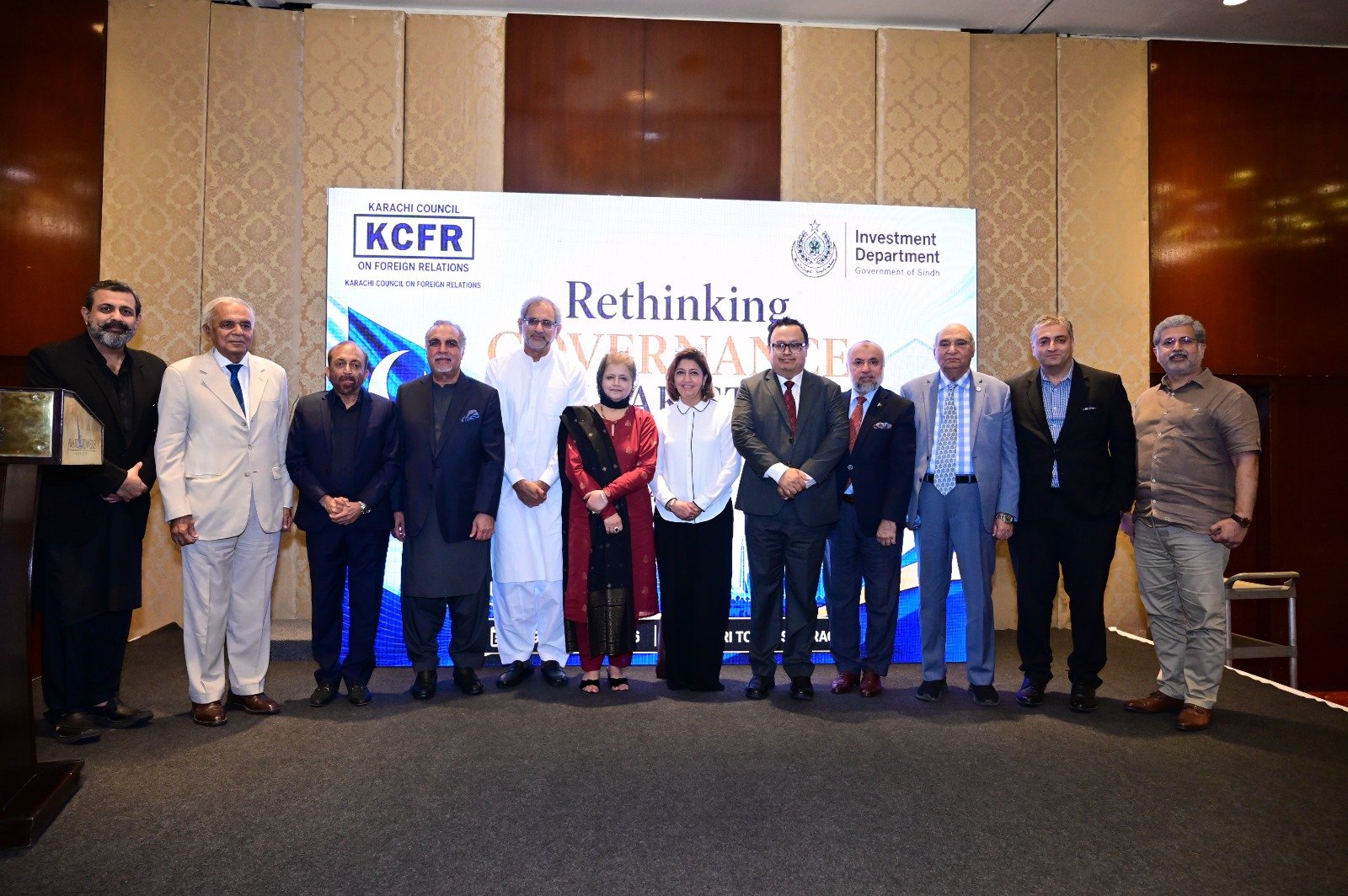
KARACHI: The Karachi Council on Foreign Relations (KCFR) hosted a high-level public debate on “Rethinking Governance in Pakistan”, bringing together political leaders, policymakers, parliamentarians, academics and analysts to discuss the country’s governance challenges and the need for structural reforms.
The discussion focused on institutional strengthening, political and administrative reforms, improved coordination between federal and provincial governments, greater accountability and transparency, and the development of governance systems that are more responsive to citizens’ needs.
KCFR Chairperson and philanthropist Nadira Panjwani emphasized the urgent need for institutional accountability, sustainable development and human-centred policymaking. She said governance should not be viewed merely as an administrative exercise but as a moral responsibility toward the well-being and dignity of every citizen.
Analyst and host of Global Sach, Dr Nasir Baig, highlighted structural trust, digital and social transformation, and the empowerment of ordinary citizens as central to meaningful governance reform. He said Pakistan’s greatest strength lies in the resilience and hard work of its people, adding that lasting reforms require genuine and selfless intent rather than short-term political calculations.
Former Sindh Governor Imran Ismail focused on structural barriers to effective public administration, particularly political reform and fiscal decentralization. He highlighted the limited authority available to Karachi’s local government compared with major cities elsewhere in the world and called for stronger accountability at senior levels of administration.
Dr Farooq Sattar Calls for Major Reforms, Greater Autonomy for Karachi
Muttahida Qaumi Movement-Pakistan (MQM-P) leader Dr Farooq Sattar has called for major administrative and constitutional reforms in Pakistan, saying the existing governance structure is no longer sufficient to effectively manage the country’s growing population and challenges. Addressing a gathering, he stressed the need for genuine participatory democracy and urged the full implementation of Article 140A to empower local governments with political, administrative and financial authority.
Dr Farooq Sattar said Pakistan’s 144 districts should be given greater access to national resources so they can determine their own priorities and develop their economic potential. He particularly highlighted Karachi, saying the city remained undercounted, underrepresented and underfunded despite being a major economic hub. He argued that greater financial and administrative autonomy could enable Karachi to substantially increase its exports and develop major infrastructure projects through its own resources.
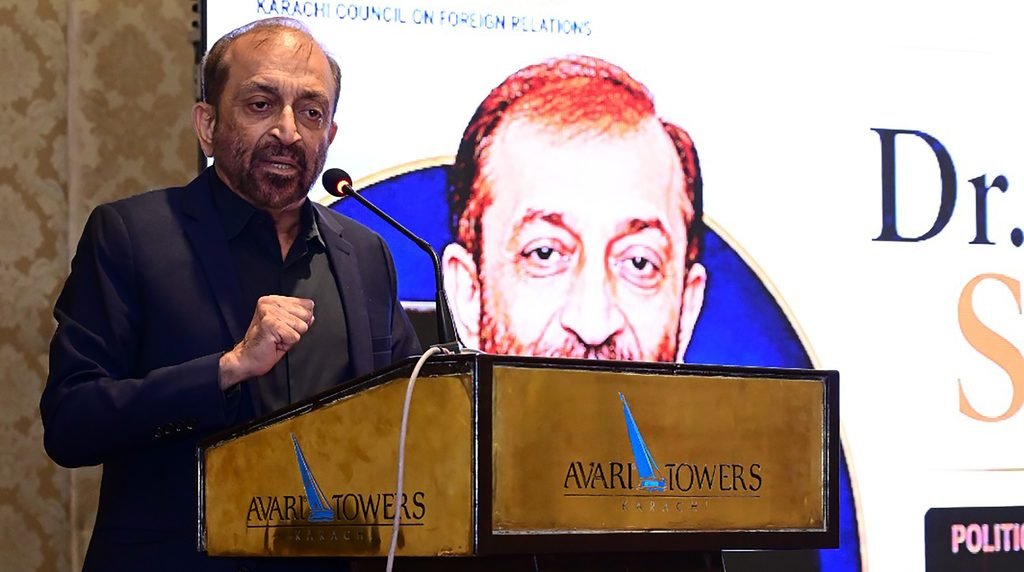
Calling the present situation a critical opportunity for Pakistan, Dr Farooq Sattar urged political stakeholders to move beyond the status quo and pursue meaningful devolution. He proposed transforming existing divisions into administrative units and suggested constitutional amendments to facilitate such reforms. He also referred to the possibility of a referendum on greater autonomy, saying stronger local governance, fairer resource distribution and greater accountability could provide a way forward for Pakistan.
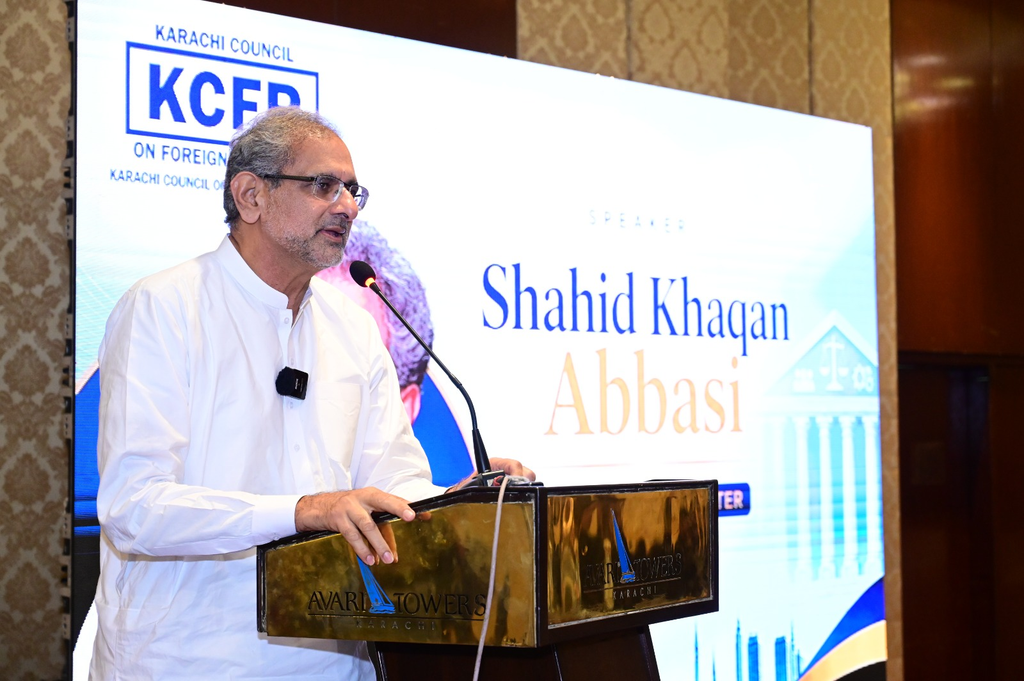
Former prime minister Shahid Khaqan Abbasi offered perspectives on Pakistan’s political and administrative challenges, emphasizing institutional reform, democratic governance, public service delivery and accountability. Referring to Pakistan’s high neonatal mortality rate, he called for stronger implementation of the rule of law and meaningful institutional reforms to improve public welfare.
The event was attended by prominent political and diplomatic personalities as well as foreign delegates, including representatives from Russia and the United States and the Consul General of Bangladesh.
A special group photograph was also arranged with students of the Ida Rieu Welfare Association, an institution serving visually impaired and deaf students, alongside the speakers. Members of the KCFR Board of Governors subsequently joined the speakers for a group photograph.
The programme concluded with KCFR Chairperson Nadira Panjwani presenting commemorative mementos to Dr Nasir Baig, Imran Ismail, Dr Farooq Sattar and Shahid Khaqan Abbasi, followed by a group photograph of speakers, guests and delegates.
The debate provided a platform for a wide-ranging discussion on Pakistan’s governance model and the institutional, political and administrative reforms considered necessary for a more accountable, effective and citizen-focused system.