
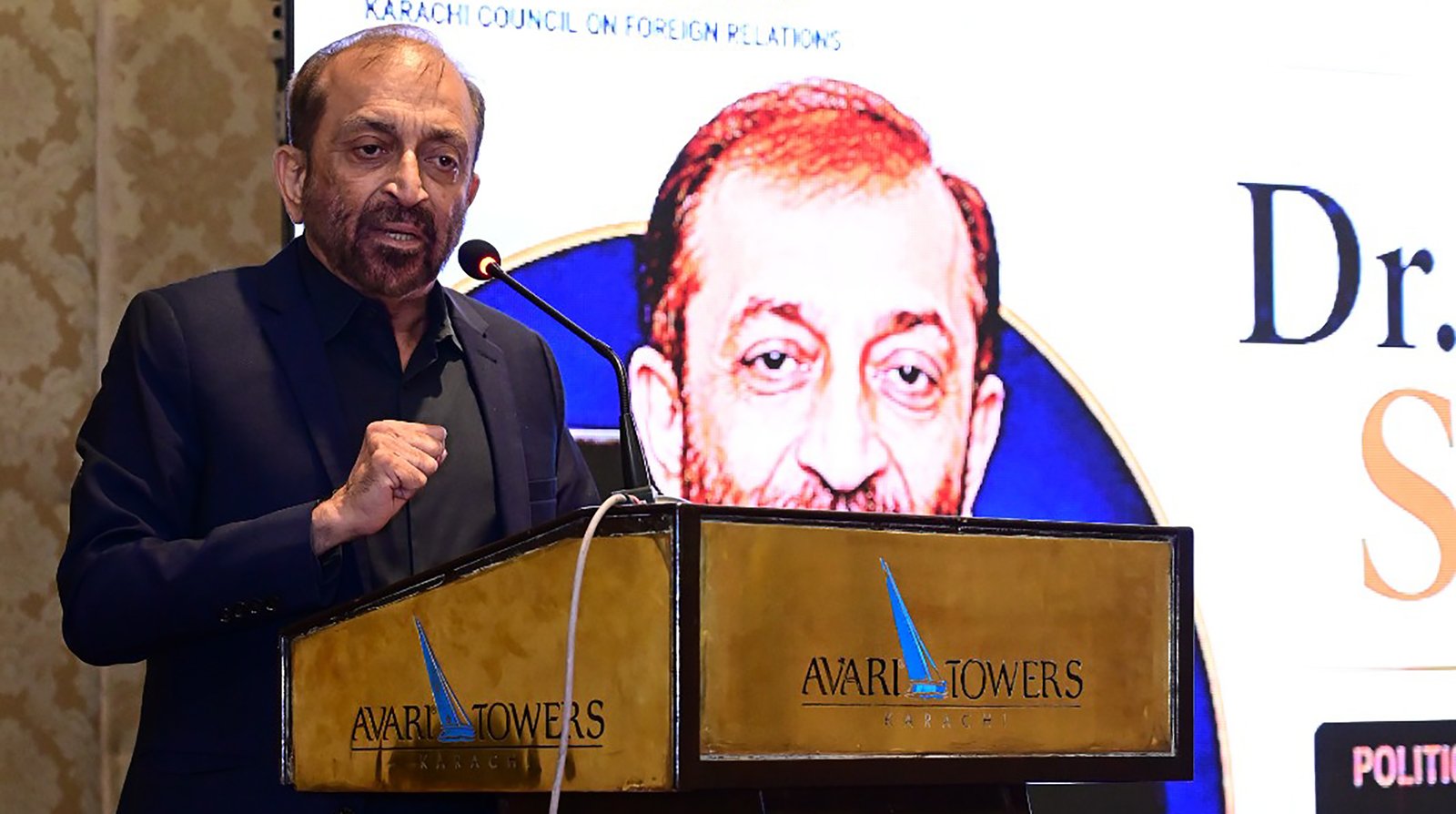
Party leader says Pakistan needs structural reforms, empowered districts and a new approach to governance
A senior leader of the Muttahida Qaumi Movement-Pakistan (MQM-P) has called for sweeping administrative and constitutional reforms in Pakistan, arguing that the country’s existing governance structure is no longer adequate to manage its growing population and economic challenges.
Addressing a gathering attended by political, business and civil society figures, the speaker said Pakistan had reached a critical stage where long-delayed reforms could no longer be avoided. He stressed the need to provide a new direction to democracy, the economy and social development.
He argued that democracy should be genuinely participatory and said the current system remained heavily concentrated around Parliament and the four provincial assemblies, which together represented only a limited number of elected representatives compared with Pakistan’s population of more than 250 million.
Call for empowered districts
The MQM-P leader strongly advocated the implementation of Article 140A of the Constitution, saying local governments should receive meaningful political, administrative and financial authority.
He proposed that national resources currently distributed between the federal government and provinces should also be distributed at the district level.
According to him, Pakistan’s 144 districts should be empowered to develop their own economies, improve public services and generate exports. He cited Sialkot as an example of the economic potential that could be unlocked through greater local autonomy.
He also claimed that Karachi, despite being undercounted, underrepresented and underfunded, possessed the potential to generate between $15 billion and $20 billion in exports if its economic potential were properly supported.
Proposal for new administrative units
The speaker also renewed the call for creating new administrative units across Pakistan.
He suggested that existing divisions could be transformed into administrative units without necessarily designating them as provinces. The heads of such units, he proposed, could be called “Chief Executives” rather than chief ministers.
He said the objective should not be to divide the geography or identity of Sindh but to distribute administrative authority, financial resources and responsibilities more effectively.
Under the proposed model, smaller administrative units would be able to establish their own priorities and exercise greater control over development spending, while accountability to voters would also become easier.
Constitutional amendments proposed
The speaker further suggested constitutional changes to facilitate the creation of new provinces or administrative units.
He argued that if Article 239 creates an obstacle to establishing new provinces within existing provinces, Parliament could amend the provision through the required constitutional majority.
He also referred to Article 48 and proposed the possibility of a referendum where constitutional or administrative changes require direct public support.
Karachi’s economic potential highlighted
The speech placed particular emphasis on Karachi, which was described as a major economic engine of Pakistan requiring greater autonomy and resources.
The speaker argued that if Karachi received an appropriate share of resources under the National Finance Commission (NFC), the city could finance major infrastructure projects from its own revenues.
He referred to plans involving mass transit corridors and a circular railway, arguing that Karachi should be enabled to develop these projects through its own financial resources rather than depending entirely on international lenders and development agencies.
Pakistan urged to move beyond the status quo
The speaker said Pakistan could no longer afford to remain trapped in the existing governance structure and called for a comprehensive reform agenda.
He described the current moment as an opportunity that should not be wasted, urging political and economic stakeholders to support decentralisation and institutional reform.
“Reform, transform and perform” was presented as the message of a changed and transformed political organisation, with an emphasis on urban, middle-class and educated leadership and the emergence of a new generation of young political workers.
The speech concluded with a call for greater cooperation and a new partnership for Pakistan, alongside an appeal to move the country away from the status quo through structural reforms and stronger local governance.